


Most mattresses support you evenly — which sounds right, but your body isn't evenly weighted. Your hips and waist carry the most mass, and that's exactly where a standard mattress gives out first: it sags, your lower back loses its line, and you wake up stiff.
The Serene 31 cm Pocket Spring Mattress takes a different approach. Its coil unit is split into five support zones, with firmer wire through the middle where your weight concentrates and softer wire where you need the surface to give. Under that sits 31 cm of layered cushioning — enough depth that the comfort layers stay comfortable for years, not months.
The feel is genuinely medium-soft (around 4.5–5 out of 10), which makes it an easy recommendation for side sleepers, lighter body weights, and anyone who wants the bed to meet them rather than push back.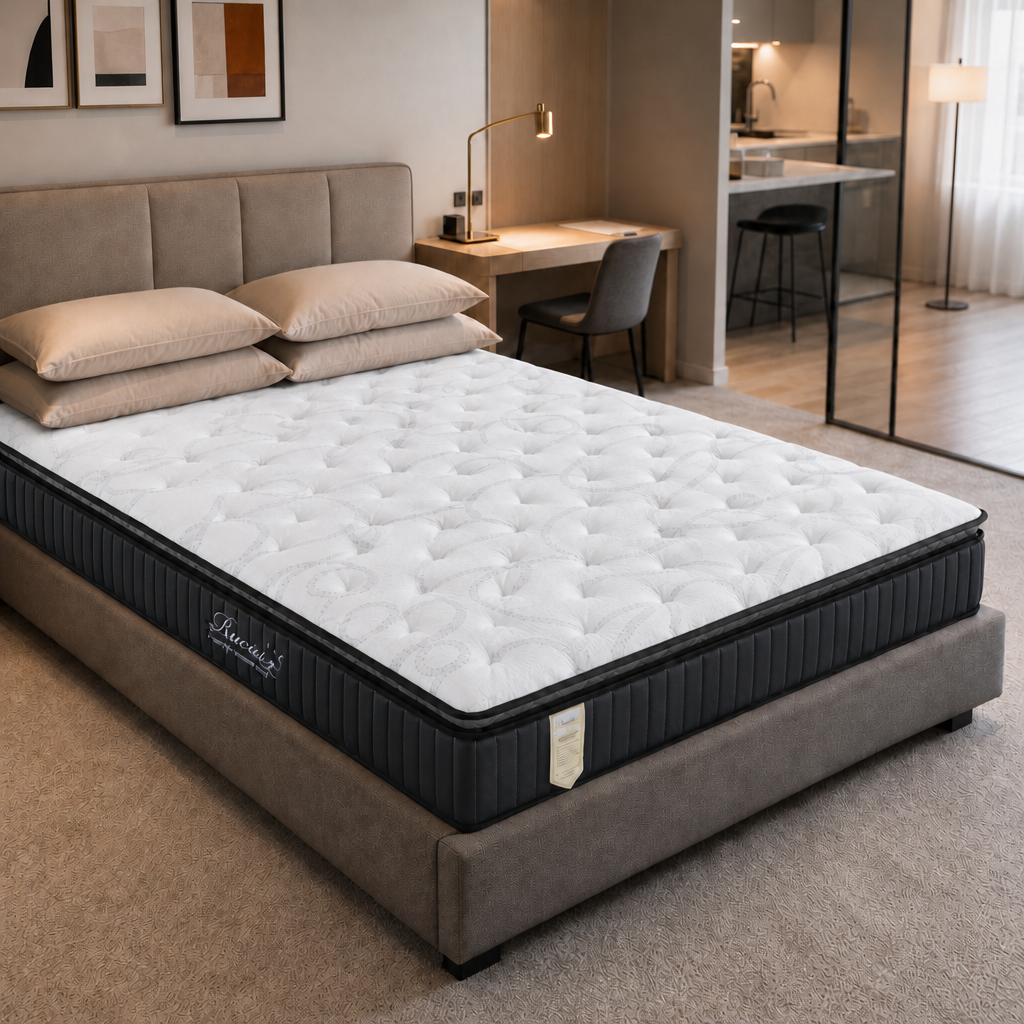
This is the part that matters, and it's worth explaining properly.
The support core is a full set of individually pocketed coils, but they're not all the same. The unit is built with two wire gauges working together:
Each coil is wrapped in its own fabric pocket and moves independently, so the zones work separately rather than pulling on each other. On top of that you get the usual pocket-spring benefits: movement doesn't travel across the bed, weight is distributed where it actually falls, and air circulates through the core instead of being trapped in solid foam.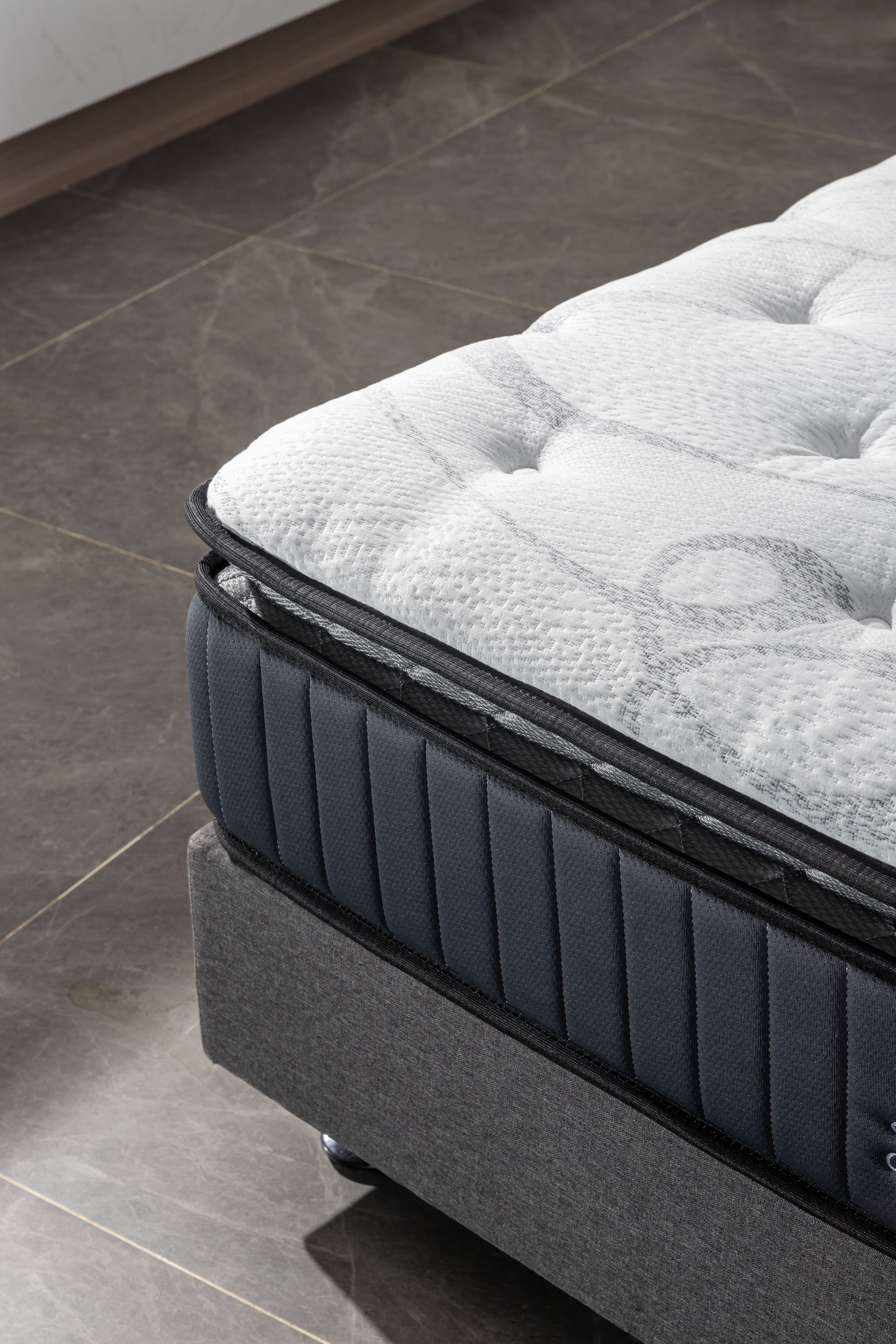
The perimeter is the first place a mattress fails. On most beds, sitting on the side feels like sitting on a slope.
This one uses a 7 cm-wide #35 high-density foam encasement running around all four sides — a solid foam rail rather than just heavier springs. It's a firmer, quieter solution, and it does three things you'll notice:
The height isn't just a number — it's what makes the comfort layers last. Here's what's above the springs:
Quilted comfort panel:
Support layer:
These three are quilted into one panel rather than stacked loosely, which is why the surface stays flat and even over time.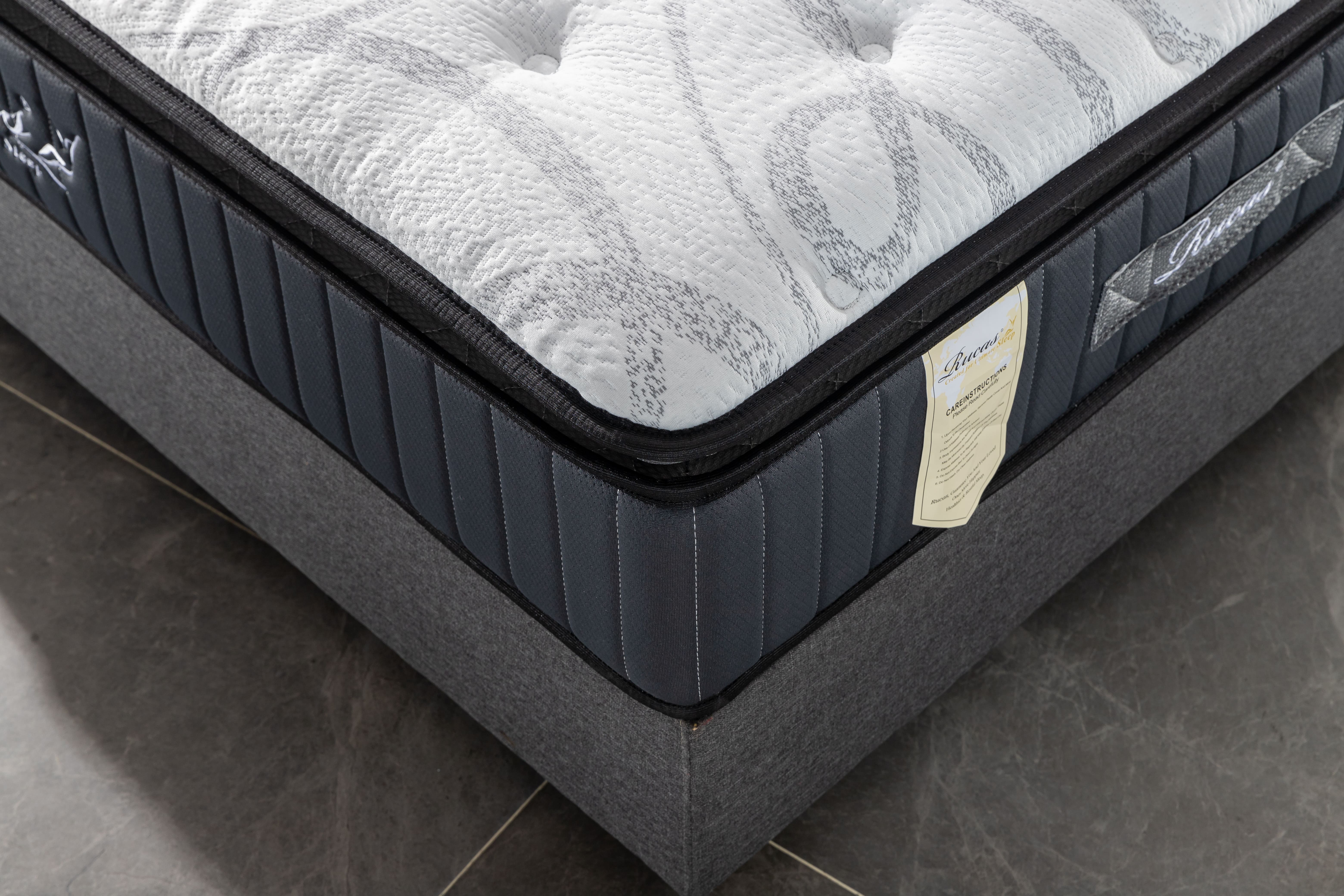
This is a single-sided (no-turn) mattress. The comfort system is built into the top only; the base is a non-slip structural layer. There's no flipping schedule to remember and no "right side" to identify at 2 a.m.
What we do recommend is rotating it 180° (head to foot) every 3–6 months for the first couple of years. It takes two minutes and evens out wear better than anything else you can do.
Your mattress is compressed and roll-packed in a single reinforced export carton — dramatically easier to get through doorways, up stairs and around tight corners than a fully built bed.
Setup:
Two honest notes: a faint new-mattress smell for the first day or two is normal — ventilate the room and it clears. And because the comfort layers are thicker than a standard bed, give yourself two to three weeks to adjust; medium-soft mattresses feel slightly different as the foams settle.
What does "5-zone lumbar support" actually do? It puts firmer coils under your waist — the heaviest part of your body — and softer coils under your shoulders and legs. The result is a more level spine instead of a sagging middle.
How soft is medium soft? Around 4.5–5 out of 10. Clearly cushioned on first touch, but it doesn't swallow you. Best for side sleepers and lighter body weights; back and stomach sleepers over roughly 230 lb (105 kg) usually prefer firmer.
Do I need to flip it? No — it's single-sided. Just rotate it head-to-foot every few months.
Is 31 cm too thick for my sheets? It's about 12 inches, so deep-pocket or "extra deep" fitted sheets are recommended. Standard sheets may not tuck fully under the corners.
Will I feel my partner moving? Less than on a traditional open-coil spring bed. Individually pocketed springs absorb most movement before it crosses the mattress.
How long until it's ready? Sleepable within hours; full height in 24–72 hours.
Choose your size and add to cart — a taller, calmer bed with support exactly where your weight sits.


