Understanding Mattress Firmness
Firmness describes the degree to which a mattress feels soft or firm. Together with conformability — how well the mattress adapts to the body's contours — firmness is one of the key factors determining overall sleeping comfort.
Mattress firmness is characterized by five indicators: Firmness Level (S), Surface Hardness (Dsurface), Core Hardness (Dcore), Bottom Hardness (Dbottom), and Hysteresis Loss Rate (H).
Firmness Level
Firmness is graded on a scale of 1 to 10, expressed as S, where 1 ≤ S ≤ 10. The lower the value, the firmer the mattress; the higher the value, the softer the mattress.
Hardness Profile Under Load
When a load increasing from 0 N to 250 N is applied, the mattress exhibits a hardness gradient across its structure, measured as surface hardness, core hardness and bottom hardness.
Surface Hardness (Dsurface)
Surface hardness is the displacement difference between 40 N and 4 N on the loading curve, expressed in mm. As the layer closest to the human body, the surface should be appropriately soft — in other words, the Dsurface value should be relatively large.
Core Hardness (Dcore)
Core hardness is the displacement difference between 200 N and 40 N on the loading curve, expressed in mm. To deliver effective pressure relief, the core layer should offer good elasticity.
Bottom Hardness (Dbottom)
Bottom hardness is the displacement difference between 250 N and 200 N on the loading curve, expressed in mm. As the layer to which the applied load is ultimately transferred, the bottom layer plays a critical supporting role and should provide a strong sense of support — in other words, the Dbottom value should be relatively small.
Hysteresis Loss Rate (H)
Hysteresis loss rate refers to the energy difference between loading and unloading when a specimen undergoes cyclic deformation. A mattress's hysteresis loss rate is generally recommended to fall between 25% and 50%, with 30% to 40% being the preferred range.
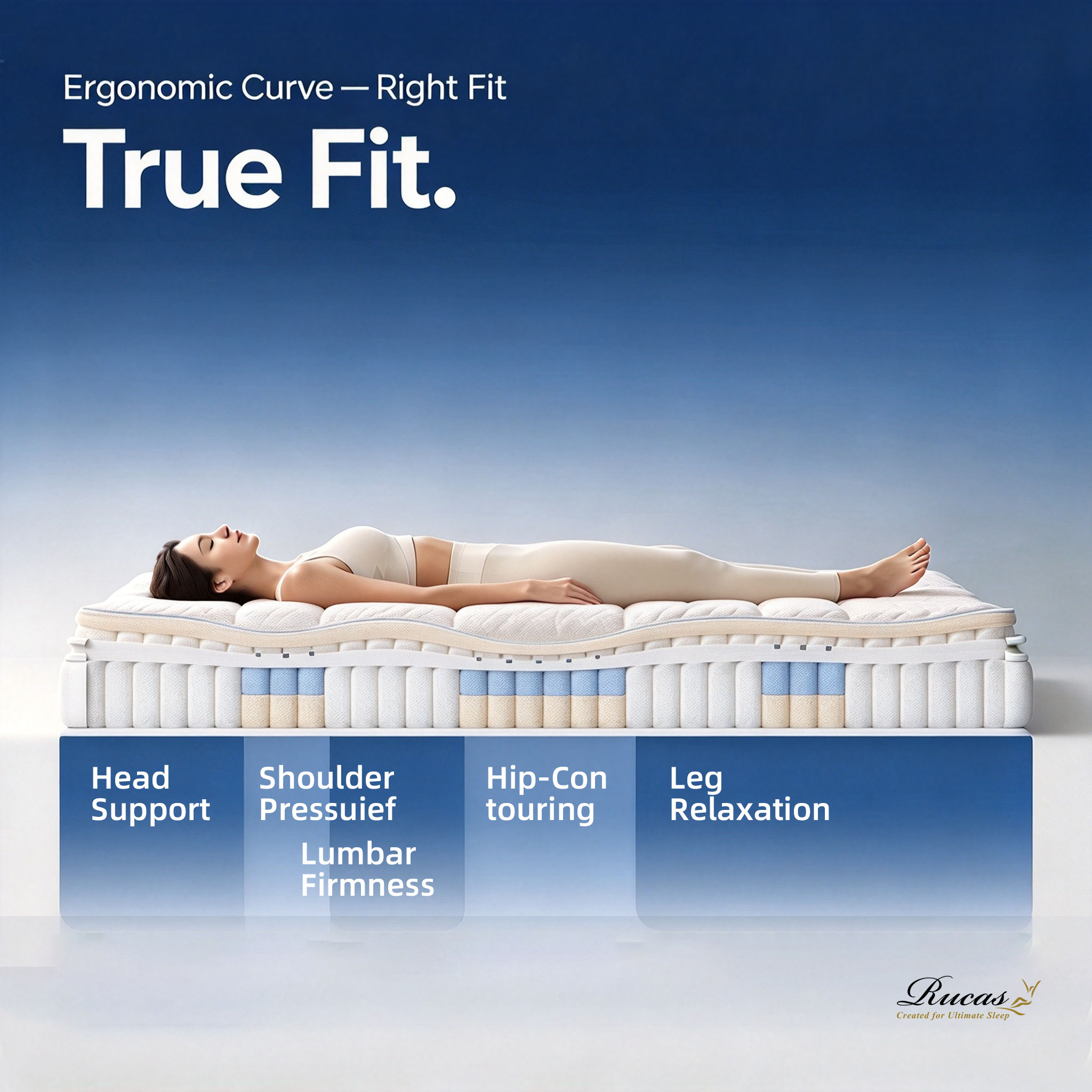
Firmness is never a numbers game defined by a cold set of data points — it is, far more, a private conversation between your body and the mattress. The same firmness rating may feel like steady, reassuring support to one person, yet register as stiff and uncomfortable to another.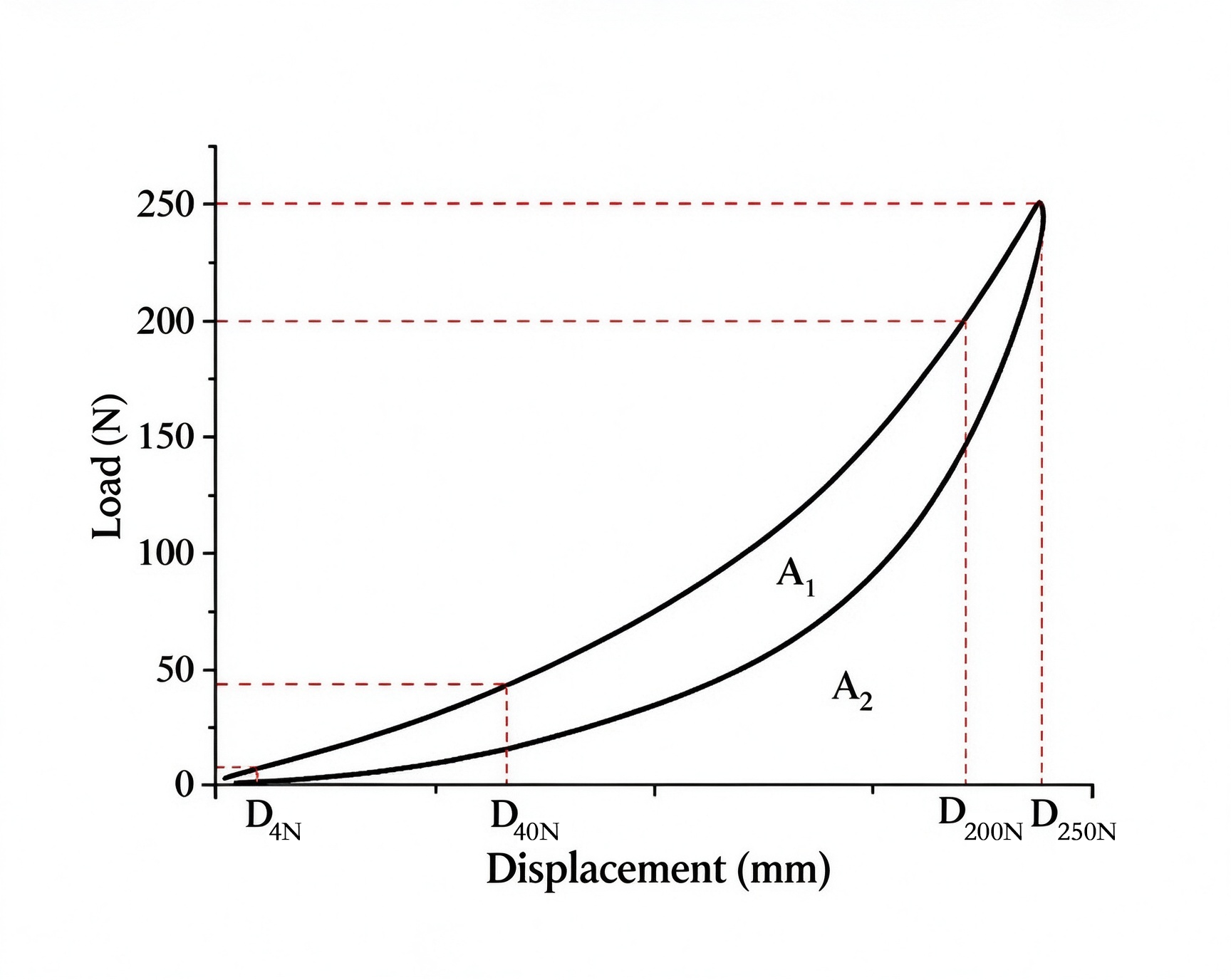
This difference stems from a unique combination of body type, weight, sleeping posture, and even long-held sleep preferences and physical memory. Some sleepers long for the soft, cloud-like embrace of a plush surface; others swear by the firm, supportive feel that holds the lower back securely in place.
That is why the "best mattress" is never the one that pushes a single specification to the extreme. It is the one that happens to align perfectly with the curves of your body and the habits of your rest. When choosing a mattress, rather than chasing specifications, it is far wiser to listen closely to what your body truly tells you.

