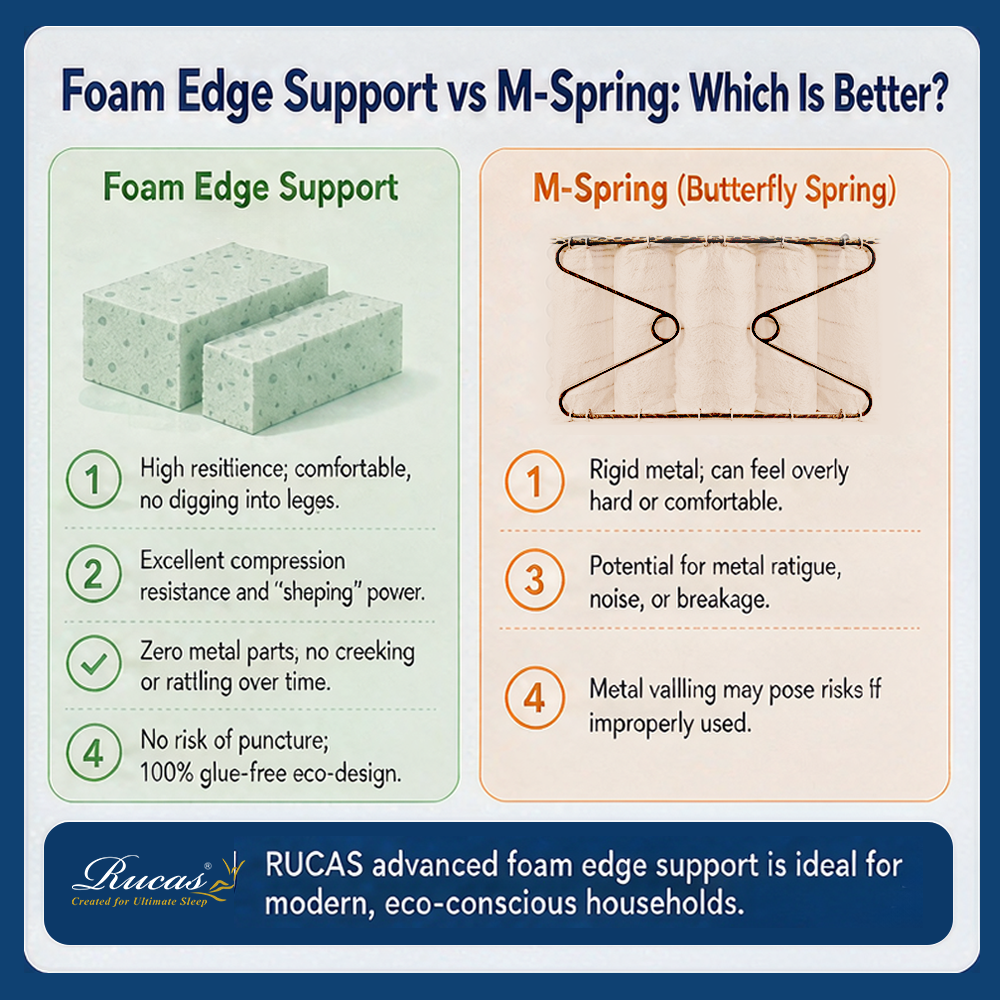
Why Edge Support Is Not Just Decoration — It's the First Line of Defense
Edge support is the critical safeguard for the area of a mattress most prone to daily wear and tear.
The mattress edge is the zone that bears the most concentrated, repeated pressure in daily life — getting in and out of bed, sitting on the edge to put on shoes, holding a child, or using a phone. Without proper reinforcement, the edge easily deforms and sinks, causing the actual usable sleep area to shrink (an industry term known as "usable bed rate" decline). For perspective, a standard 8cm foam border around a 1.5m × 2m mattress can reduce the usable sleeping area by approximately 0.3㎡).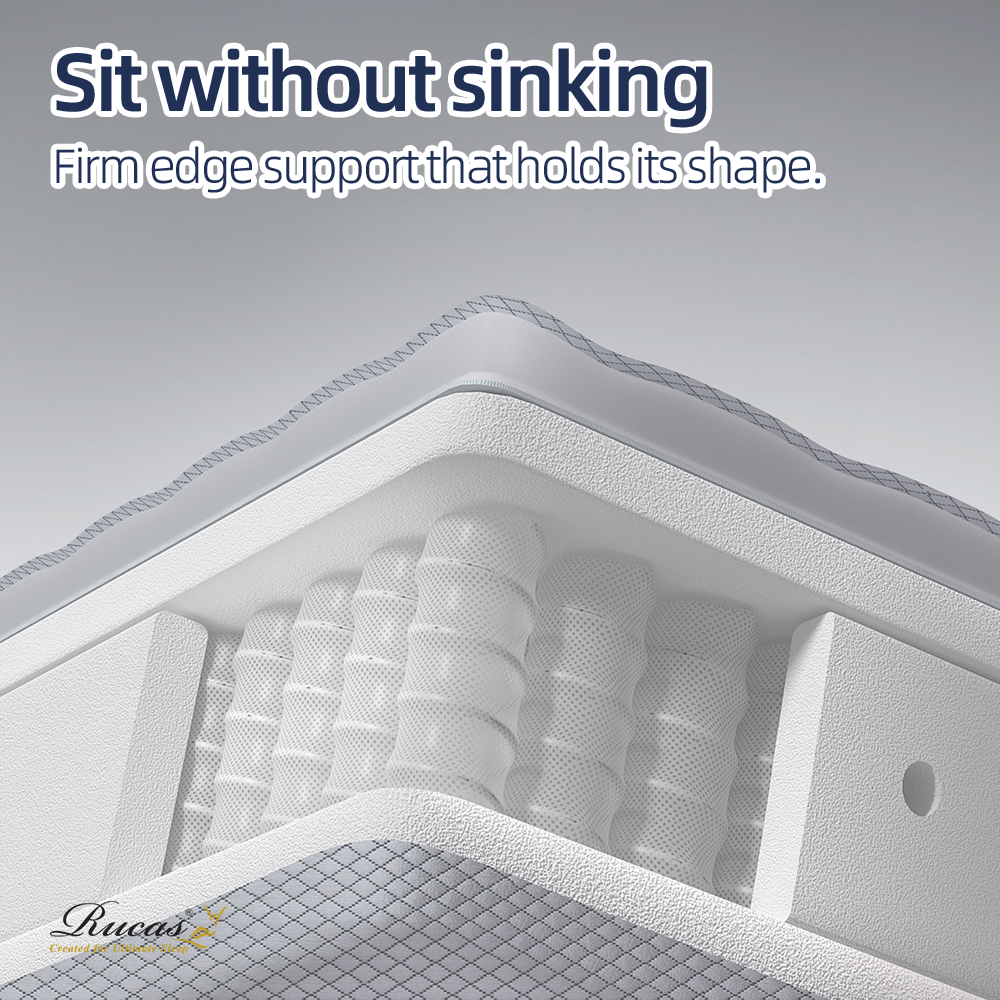
This is especially critical for children, the elderly, and pregnant women. A well-reinforced edge provides additional support, reducing the risk of rolling or slipping off the bed during sleep or while sitting.
Edge support resists lateral pressure and impact, protecting the perimeter springs from deformation and thereby extending the overall service life of the mattress.
High-resilience, high-density foam materials act as a "shaping" element, keeping mattress edges straight, firm, and resistant to deformation, ensuring a clean, premium appearance.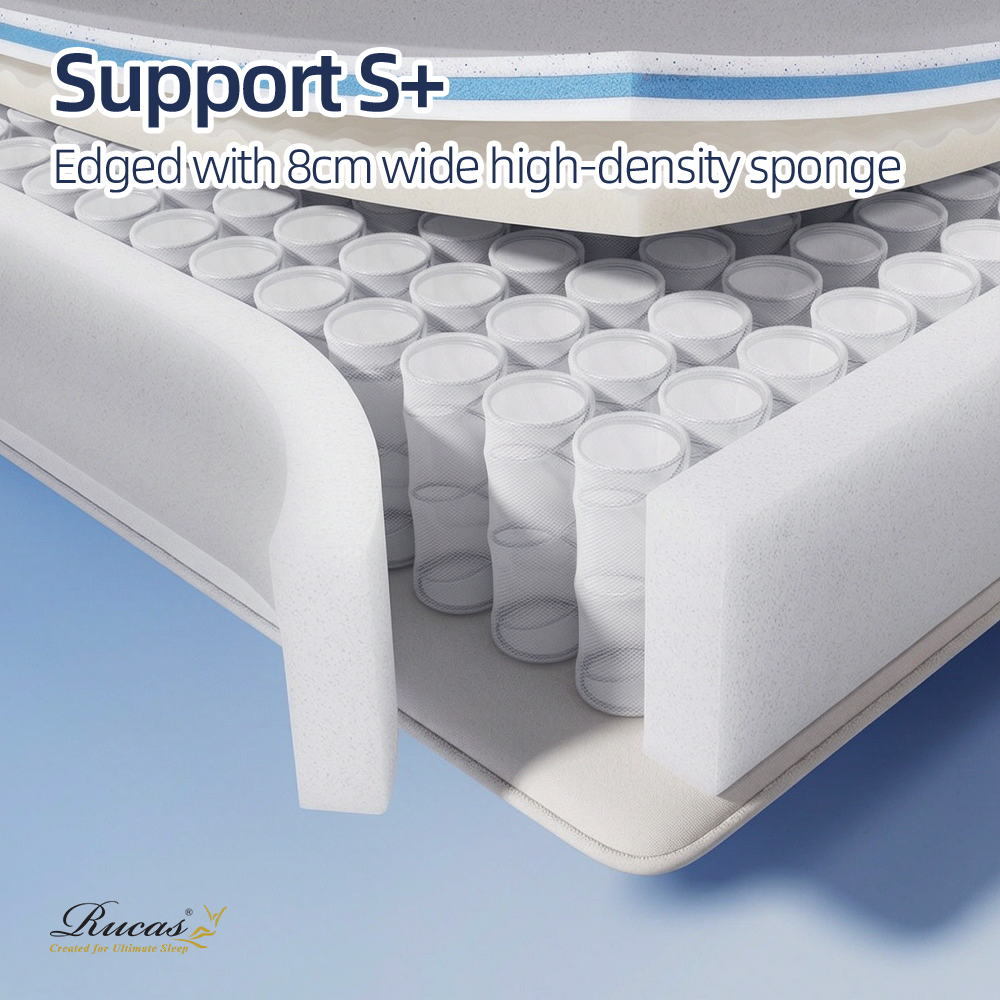
Certain edge reinforcement systems — such as butterfly springs or M-springs — require no glue for fixation, avoiding the use of large amounts of adhesive and reducing concerns about odors and environmental impact. At RUCAS, all our foam-edge mattresses are assembled without any glue bonding, delivering 100% safety and eco-friendliness.
A counterintuitive fact: Many roll-packed and vacuum-compressed mattresses deliberately omit rigid edge support to allow for compression. Low-cost mattresses also frequently skip edge reinforcement due to budget constraints. Therefore, whether a mattress has proper edge support is itself one of the key differentiators of mattress quality.